
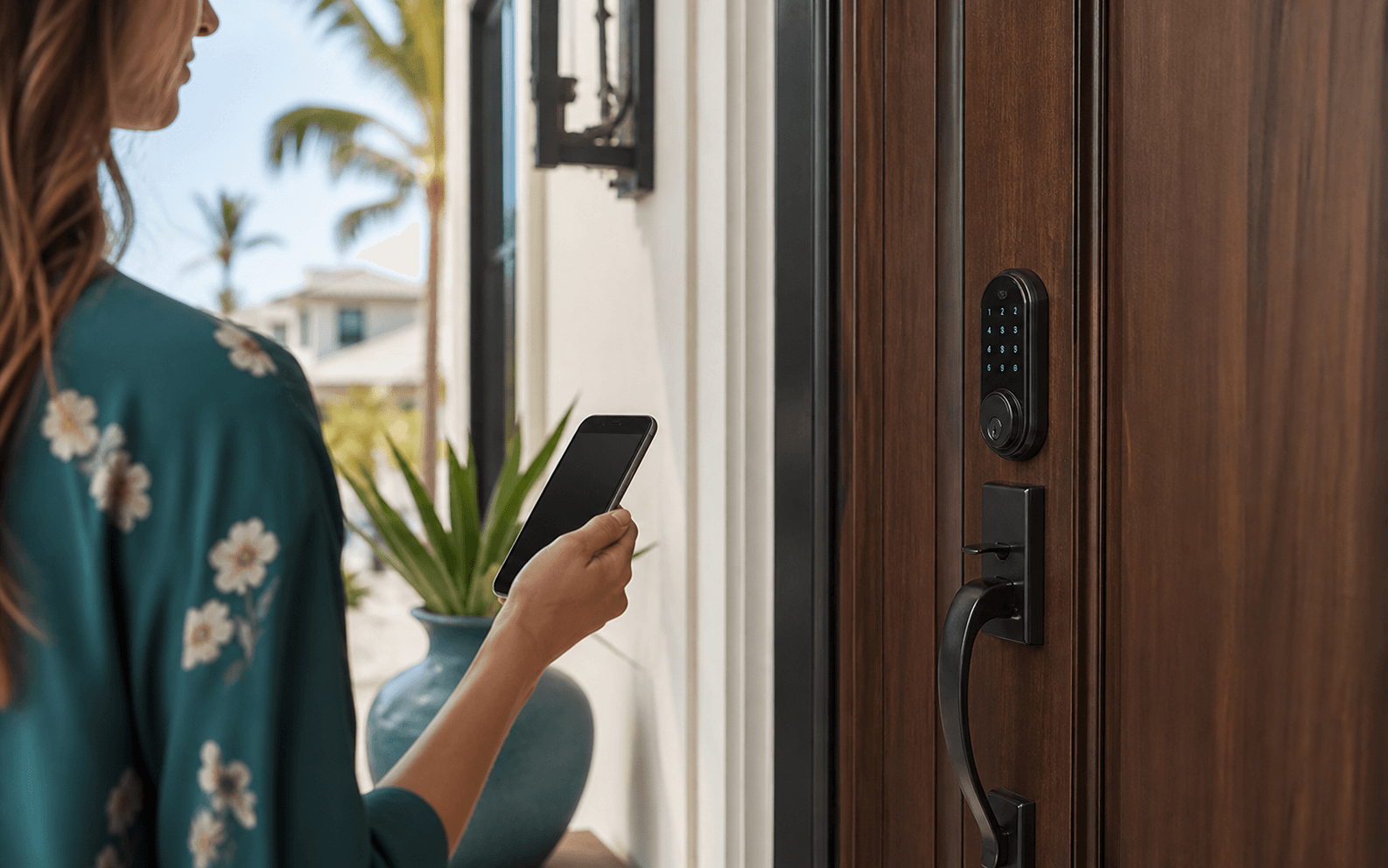
If you are wondering how to secure a french door, the most effective approach is to reinforce both leaves, not just the active one. The inactive leaf should be locked with top-and-bottom bolts or rods that anchor into the header and threshold, while the active leaf should have a quality keyed deadbolt or equivalent primary lock. From there, you strengthen the frame, check alignment, and make sure the door still meets the applicable Florida requirements for your property and exposure.
Why French Doors Need a Different Security Plan
French doors are attractive, bright, and popular for patios, lanais, and rear entries, but they can be easier to force than a single solid door if they are not set up correctly. The main issue is the inactive leaf, which often depends on flush bolts, astragals, or surface hardware to stay closed. If that side can flex, shift, or lift, the whole system becomes easier to compromise.
The right security plan treats the pair as one opening with two coordinated leaves. That means the inactive leaf must resist movement first, and the active leaf must lock into reinforced framing second. If one part is weak, the entire door pair is weak.
Start with the inactive leaf
The inactive leaf is usually the weak point on double doors. A secure setup uses top-and-bottom bolts or rods that engage the head and threshold so the panel cannot be pried open easily. Dummy hardware by itself is not a security substitute, because decorative trim does not actually lock the door.
If the current hardware is loose, worn, or difficult to align, the best first step is often to correct the fit before adding more parts. When a French door is out of alignment, even strong locks may not hold properly because the latch or bolt cannot engage fully.
Use a real primary lock on the active leaf
The active leaf should have a keyed deadbolt or equivalent primary locking device. In many cases, a second bore hole for a deadbolt is recommended when the door currently relies on lighter hardware or a handle set alone. The goal is a lock that engages solidly into a reinforced strike and framing, not just into thin trim or soft material.
If you are comparing options, avoid treating decorative handles or dummy sets as security hardware. They can improve appearance, but they do not replace a true lock.
Look at the whole opening, not just the lock
Even strong locks can underperform if the strike plate is weak, the hinges are loose, or the frame itself is compromised. A French door security upgrade should look at:
- Strike plate strength
- Screw length and framing engagement
- Hinge condition and reinforcement
- Astragal fit between the two leaves
- Threshold and head engagement for the inactive leaf bolts
When everything works together, the door is much harder to flex, pry, or separate.
Comparison: A French door with only decorative hardware and loose alignment is like a gate with a painted latch. It may look closed, but it does not create the same resistance as a properly bolted inactive leaf plus a reinforced keyed deadbolt on the active leaf.
Best Upgrades for a Stronger French Door
There is no single part that solves every French door problem. The best results usually come from combining better locking hardware with reinforcement and proper installation. If your door is older, has sagged, or was installed with minimal hardware, even moderate upgrades can make a noticeable difference.
1. Install or upgrade the deadbolt
A Grade 1 deadbolt is commonly considered a strong residential option. The lock body should match the door thickness and style, and the strike should be reinforced. Long screws that reach the framing, not just the jamb surface, are important because they help transfer force into the structure around the opening.
For homeowners in Southwest Florida, it is smart to choose hardware that suits exterior use and local conditions. Coastal air, humidity, and heavy seasonal weather can all affect how well hardware holds up over time.
2. Reinforce the strike area
A deadbolt is only as good as the material it locks into. Reinforced strike plates and proper anchoring can improve resistance to forced entry. This is especially important on patio and rear French doors, where the frame may have been built more for appearance than for security.
When upgrading strikes, the exact fit matters. Hardware compatibility, door thickness, and the frame material can all affect the final result.
3. Secure the inactive leaf with top and bottom hardware
Top-and-bottom bolts or rods help stop the inactive leaf from moving away from the frame. In many cases, a flush-bolt or astragal-based setup is used to anchor that side. If the inactive leaf can flex even a little, the whole door pair can become easier to pry.
Be sure the bolts actually engage cleanly. If the door is rubbing, sagging, or out of square, the hardware may not seat correctly.
4. Reinforce the hinges
Hinge reinforcement is often overlooked, but it matters. If the hinge side gives too much, the door can shift enough to affect lock engagement. Stronger screws, tighter hinge fit, and reinforcement where appropriate can help keep the leaf aligned with the strike and bolts.
5. Add a wraparound or security trim plate where appropriate
A wraparound trim plate or security trim can help protect vulnerable areas around the lock set. This kind of upgrade may be useful when the door or trim has existing wear, or when the original cutout leaves too much weak material around the hardware.
Not every French door needs the same parts. The best setup depends on the door construction, material, and how the opening is used.
| Upgrade | What it helps with | Notes |
|---|---|---|
| Grade 1 deadbolt | Primary locking strength on the active leaf | Compatibility depends on door thickness and bore layout |
| Reinforced strike plate | Stronger resistance at the lock point | Long screws should reach framing where appropriate |
| Top and bottom bolts | Locks the inactive leaf in place | Alignment must be correct for reliable engagement |
| Hinge reinforcement | Reduces sag and movement | Best used with other security improvements |
| Security trim or wraparound plate | Protects weak or worn areas around hardware | Use when the door or prep area needs extra support |
Check the alignment before you add more parts
If the inactive leaf already sits crooked, has gaps, or drifts when the wind hits it, a new lock alone may not solve the problem. In many cases, the most useful improvement is to correct alignment and confirm that the astragal, bolts, and strike points line up properly.
That is why French door security often starts with inspection rather than replacement. Small fit issues can create big security gaps.
Think about Florida conditions
For exterior French doors in Southwest Florida, security should not be separated from weather and code considerations. Doors exposed to coastal wind and hurricane conditions may need to be installed according to manufacturer instructions and the applicable Florida Building Code product approval for that assembly. The approved installation details can include anchorage requirements and performance limits for the tested door system.
Depending on the building and use case, there may also be code-related requirements for labeling, threshold height, and keyed locking devices. These details can vary by property type and jurisdiction, so it is important to confirm what applies before making major changes.
That is one reason homeowners often choose a code-aware residential locksmith fort myers service for French door upgrades. The goal is not just stronger hardware, but hardware that fits the door, fits the opening, and makes sense for the building.
Match the security upgrade to the use of the door
A rear patio door, a primary entry, and a seldom-used side entrance do not always need the same setup. A vacation home, rental, or full-time residence may also have different priorities. Some owners want the highest possible resistance. Others want a balanced solution that keeps the door easy to use while improving security.
That is also why it helps to compare the French door plan with broader home entry strategies. If you are thinking about future upgrades, the related guide on smart locks for Southwest Florida homes can help you compare convenience, compatibility, and weather considerations for other doors in the home.
Frequently Asked Questions
What is the weakest part of a French door?
The inactive leaf is usually the weakest point because it often relies on flush bolts, astragals, or surface hardware rather than a full primary lock. If that leaf can flex, lift, or separate from the frame, the entire opening becomes easier to compromise.
Do I need two deadbolts on a French door?
Not always. In many setups, the active leaf uses a keyed deadbolt while the inactive leaf is secured with top-and-bottom bolts or rods. Some doors may benefit from additional reinforcement, but the right configuration depends on the door’s construction, thickness, and existing hardware.
Is dummy hardware enough for security?
No. Dummy hardware is decorative and does not replace a real locking system. If the inactive leaf is not mechanically secured and the active leaf does not have a proper deadbolt or equivalent lock, the door pair is still vulnerable.
Should I worry about code requirements in Florida?
Yes, especially for exterior doors. In Florida, French doors may need to meet product approval and installation requirements, and some buildings have additional rules related to thresholds, labeling, or keyed locking devices. The right answer can vary by property, location, and door use, so verify the applicable requirements before changing the assembly.
When should I call a locksmith instead of replacing the whole door?
Call a qualified locksmith when the door is structurally sound but the security hardware, alignment, or lock function is the issue. If the door is damaged, does not meet weather or code needs, or no longer fits the frame properly, a door professional or manufacturer guidance may be needed as well. A locksmith can help you assess whether reinforcement, lock replacement, or a more complete upgrade is the better path.