Access control lets a business decide who can enter certain doors, when they can enter, and how access can be changed without handing out new metal keys. For many small businesses, the biggest benefit is simple: you can remove access fast when an employee leaves or a key card is lost.
Greenlaw Lock & Key works with businesses in Southwest Florida that want better control over offices, storage rooms, employee entrances, and restricted areas. The right setup depends on the building, the number of users, the doors involved, and how quickly the business needs to add or remove access.
What does an access control system include?
A basic access control system usually includes an electronic lock or electric strike, a credential reader, a control panel or controller, user credentials, and software or app access for management.
The credential can be a card, fob, keypad code, mobile credential, or biometric method depending on the system. When someone presents a valid credential, the system checks the permission and unlocks the door if access is allowed.
The system can also keep a record of access events. That record can help a business see when a door was used, which credential was used, and whether access was denied.
How is this different from regular keys?
Regular keys are simple, but they are hard to control after they leave your hand. A copied key may keep working for years unless the lock is rekeyed or replaced.
Access control is easier to update. If an employee leaves, the business can remove that credential from the system. If a fob is lost, it can be disabled without changing every lock.
This is especially useful for businesses with staff turnover, vendors, cleaners, delivery access, or separate areas that should not be open to every employee.
What doors should a small business consider first?
Start with the doors that create the most risk or the most key-management frustration. Common choices include the main employee entrance, back door, inventory room, server or records room, office suite door, and shared commercial building entry.
You do not have to convert every door at once. Many small businesses begin with one or two important doors, then expand later.
For example, a retail business may control a rear delivery door and stockroom first. A professional office may control the suite entry and records room. A service business may control a warehouse or vehicle key area.
What happens during normal daily use?
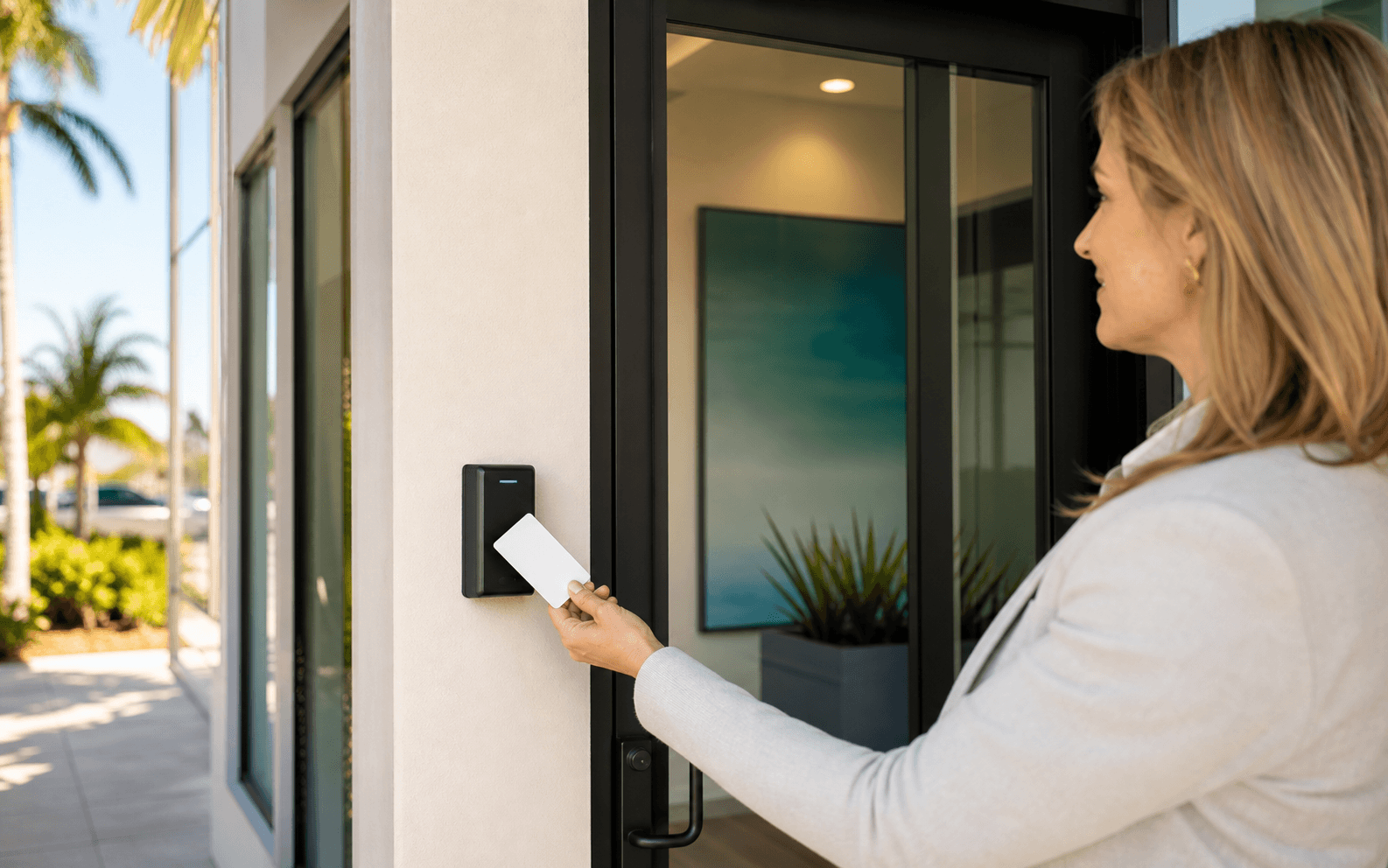
An authorized person presents a credential at the reader. The reader sends the request to the controller. If the person has permission at that time, the lock releases.
Permissions can be limited by schedule. A manager may have access all week, while a cleaning company may only have access after hours on certain days.
Some systems can also set different access levels. An employee may be allowed through the front employee door but not into a storage room or office with sensitive records.
Can access control work during a power outage?
It depends on the hardware design, backup power, and whether the door is configured to fail safe or fail secure. This is an important planning question, especially for businesses in areas where storms and outages can happen.
Fail safe generally means the door unlocks when power is lost. Fail secure generally means the door stays locked from the outside while still allowing required exit from inside. Life safety rules matter, so exit paths must be planned correctly.
Many systems use backup batteries or power supplies to keep critical doors operating for a period of time. A locksmith or access control professional can explain the right approach for each door.
How much management does the business need to do?
For most small businesses, management is straightforward once the system is set up. Someone needs to add users, remove users, replace lost credentials, and review schedules when staffing changes.
The most important habit is removing access immediately when someone should no longer have it. That is where access control is much stronger than regular keys.
It also helps to review the user list regularly. A quarterly review can catch old vendors, former employees, duplicate credentials, or access levels that are no longer needed.
What should a business think about before installing it?
Think about doors, users, schedules, and growth. Count how many doors need control now and how many may need it later. List the people who need access and whether they all need the same permissions.
Also consider the building conditions. Glass doors, aluminum storefronts, fire-rated doors, panic hardware, and shared landlord-controlled entries can require different hardware choices.
Greenlaw Lock & Key can review the doors and explain what is practical before a business commits to a system. That helps avoid buying equipment that does not fit the door or does not support the workflow.
Does access control replace all locksmith work?
No. Electronic access still depends on reliable doors, frames, locks, latches, strikes, closers, and exit hardware. If the door is sagging or the latch does not line up, the electronic system may not work correctly.
Access control is strongest when the mechanical side is sound. A door that closes cleanly and latches consistently gives the electronic hardware a better foundation.
That is why a proper review should include both the security plan and the physical door condition.
What is the best next step for a small business?
Start with a door-by-door access review. Identify the doors that create the most risk, the people who need access, and the moments when access changes become a problem.
Greenlaw Lock & Key can help Southwest Florida businesses compare access control systems in Fort Myers, plan around existing hardware, and get a quote for the first phase of commercial locksmith services. If you are not sure whether you need one controlled door or a larger system, start with the access problems you want to solve.
FAQ
Can access control be added to an existing door?
Often, yes. The door, frame, lock type, and exit hardware need to be checked before choosing equipment.
What happens if an employee loses a fob?
The lost fob can usually be disabled in the system. A new credential can be issued without changing the lock.
Do small businesses need access logs?
Many do. Logs can help confirm when a door was used and can support basic accountability for sensitive areas.
Can different employees have different access?
Yes. Most systems allow access groups, schedules, and door-specific permissions.
Is access control only for large buildings?
No. Many small businesses start with one important door and expand later as needs grow.