
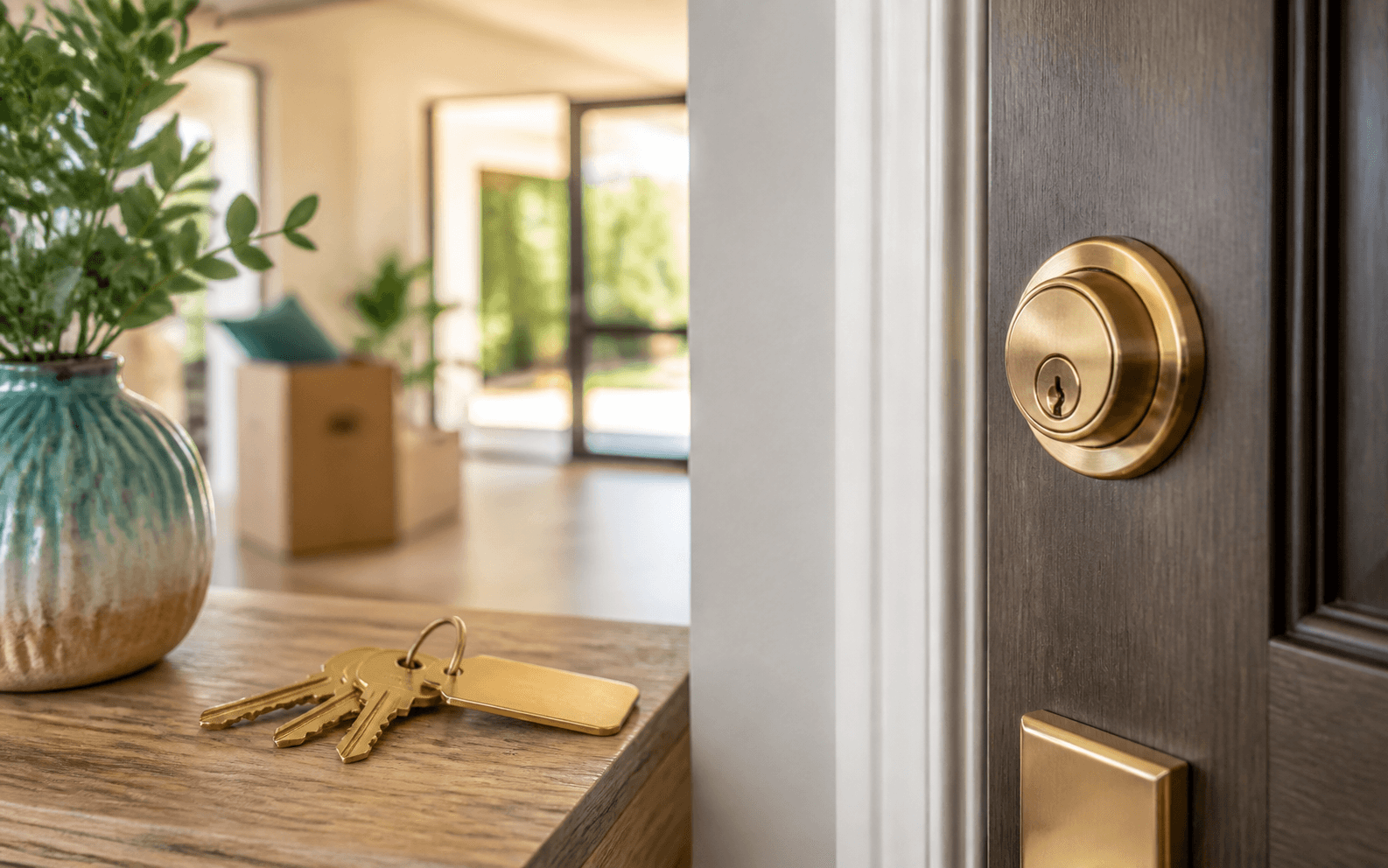
Rekeying the locks after you move into a new home usually costs less than replacing every lock, and it gives you control over who has working keys. Most homeowners should budget for a service call plus a per-lock charge, with many basic rekey jobs taking about 30 to 90 minutes depending on the number of doors.
For a homeowner in Southwest Florida, the main question is not only price. It is whether old keys are still floating around with previous owners, tenants, contractors, cleaners, neighbors, or real estate contacts. Greenlaw Lock & Key often recommends rekeying when the hardware is still in good shape and the goal is simply to make old keys stop working.
Why should you rekey instead of replacing every lock?
Rekeying changes the pins inside the lock cylinder so the old key no longer works. The outside hardware stays in place, which is why it is usually faster and less expensive than a full replacement.
Replacing a lock makes sense when the hardware is damaged, corroded, outdated, loose, or no longer fits the door properly. Rekeying makes sense when the lock works well but you do not trust the key history.
In many move-in situations, the safest practical choice is to rekey all exterior entry locks at the same time. That includes the front door, back door, garage entry door, side door, and any detached storage or workshop doors.
What affects the cost of rekeying a house?
The biggest cost factors are the number of locks, the type of cylinders, whether the locks use the same keyway, and whether any hardware needs repair before it can be rekeyed.
If all locks are from the same compatible brand and are in good condition, the job is usually straightforward. If the home has a mix of brands, worn cylinders, missing keys, smart locks, or decorative hardware with unusual parts, the locksmith may need more time.
Emergency timing can also affect price. A scheduled daytime appointment is usually more predictable than an after-hours call. If you just closed on a home, it is usually worth booking the rekey before move-in day or as soon as you receive keys.
How many locks should be rekeyed?
Any lock that controls access to the living space should be included. A common mistake is rekeying only the front door while leaving a garage entry door or side door on an old key.
Walk the property and count every keyed exterior lock. Include doors from the garage into the house, gates that protect side-yard access, storage rooms with valuables, and any doors used by service vendors.
If one key can open several doors, ask whether the locks can remain keyed alike. Many homeowners prefer one key for all main entry doors because it is easier to manage and easier to update later.
Can a locksmith rekey locks without the original key?
Often, yes. A locksmith may still be able to rekey the lock without the original key, but it can take longer because the cylinder may need to be picked, decoded, or disassembled.
If you have at least one working key, keep it available for the appointment. It can make the job faster and may reduce the amount of labor needed.
If a lock has no working key and is already hard to turn, replacement may be the better choice. Greenlaw Lock & Key can inspect the hardware and explain whether rekeying or replacement gives you the better long-term result.
Should you rekey smart locks too?
Smart locks still have mechanical key cylinders in many cases. If the smart lock has a physical override key, that cylinder should be considered during a move-in security check.
You should also reset digital access. Remove old codes, update app access, change administrator permissions, and check whether any previous owner still has access through a connected account.
Mechanical rekeying and digital reset are separate steps. A smart lock can have new codes but still accept an old physical key if the cylinder was never rekeyed.
What should you do before the locksmith arrives?
Make a quick door list. Note which doors have deadbolts, knob locks, keypad locks, or no working key. If possible, gather every key you received at closing.
Test each lock from both sides before the appointment. If a deadbolt rubs, sticks, or only locks when the door is lifted, tell the locksmith. That may be an alignment issue, not just a key issue.
It also helps to decide whether you want one key for all doors or separate keys for certain spaces. For example, a homeowner may want the main house on one key and a detached workshop on a different key.
When is rekeying not enough?
Rekeying does not fix weak door frames, short screws in strike plates, loose deadbolts, damaged latches, or doors that do not close squarely. If the door hardware is worn out, rekeying only solves the old-key problem.
In coastal and humid areas of Southwest Florida, corrosion can shorten the useful life of exterior lock hardware. If a lock feels gritty, swollen, or unreliable, replacement may be safer than rekeying.
Ask the locksmith to check door alignment, deadbolt throw, strike plate fit, and visible wear. A lock should turn smoothly and seat fully without forcing the key.
What is the best next step after buying a home?
Schedule a whole-home lock check and rekey as soon as possible after closing. It is a small step that removes uncertainty about old keys and gives the new homeowner a clean starting point.
Greenlaw Lock & Key can help homeowners in the Southwest Florida service area review the doors and arrange lock rekeying in Fort Myers, then identify hardware that should be repaired or replaced. If you are moving into a new home, request a locksmith quote based on the number of keyed locks and whether you want them keyed alike.
FAQ
Is rekeying cheaper than replacing locks?
Usually, yes. Rekeying keeps the existing hardware and changes the key access, while replacement includes new lock hardware plus installation.
Should I rekey locks before or after moving in?
As soon as you have legal access to the home. Many homeowners schedule it for closing day or the first day they receive keys.
Can all my doors use one key?
Often, yes, if the locks are compatible. A locksmith can tell you which locks can be keyed alike and which would need replacement.
Do I need to rekey interior doors?
Usually only if the door protects valuables, a rental area, a home office, or a space that should have limited access.
Does rekeying fix a sticky lock?
Not always. A sticky lock may be caused by wear, corrosion, door misalignment, or a damaged key, so it should be inspected before deciding.