
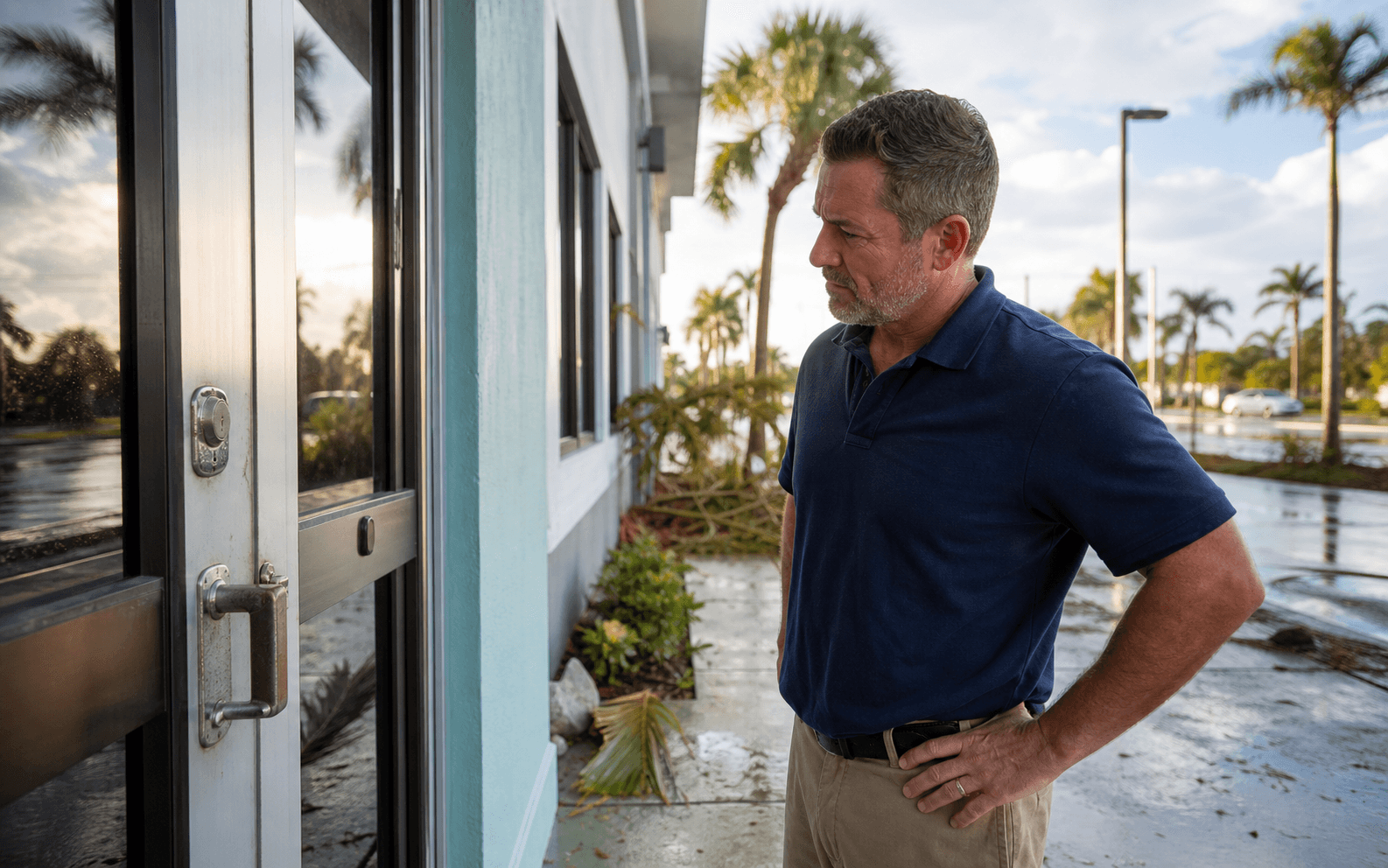
After hurricane season, you should repair a lock if the hardware is still solid and the problem is minor, but replace it if corrosion, impact damage, water intrusion, or door movement has made it unreliable. A lock that does not turn smoothly or latch fully should be checked before it fails during a busy morning, storm cleanup, or emergency.
In Southwest Florida, storm season can be hard on exterior doors and locks. Greenlaw Lock & Key often sees problems that show up after wind-driven rain, humidity, debris, door swelling, or small shifts in the frame.
Why do locks act up after storms?
Storms can expose locks to water, grit, salt air, and pressure changes. Even if the door looks fine, the cylinder, latch, strike plate, hinges, or frame may have been affected.
Wind-driven rain can push moisture into places that normal rain does not reach. Debris can enter the keyway. Doors can swell or shift slightly. A deadbolt that worked before the storm may start rubbing the strike plate afterward.
The problem may not be obvious until you try to lock the door and notice extra resistance.
What are signs a lock can probably be repaired?
Repair may be enough when the key still turns, the lock is not badly corroded, the door closes cleanly, and the issue appears to be dirt, minor alignment, or a loose part.
Examples include a loose strike plate, a latch that needs adjustment, a cylinder that needs cleaning, or a deadbolt that rubs slightly because the door settled.
If the hardware is good quality and not damaged, a repair can extend its useful life. The goal is to restore smooth operation without replacing parts that still have value.
What are signs replacement is safer?
Replacement is usually better when the lock is rusted, pitted, cracked, loose in the door, unreliable, or difficult to operate even after basic adjustment.
If the key feels gritty, the deadbolt does not fully extend, the latch sticks, or the exterior hardware has visible corrosion, the lock may not provide dependable security.
Replacement is also worth considering if the hardware is older and storm exposure has pushed it past the point of practical service. A lock that works only some of the time should not protect a main entry.
How does door alignment affect the decision?
Door alignment can make a good lock feel broken. If the door shifted during storm season, the bolt may no longer line up with the strike plate.
Test the lock with the door open. If it works smoothly open but not closed, the door or strike alignment is likely involved. If it sticks both open and closed, the cylinder or lock body may be the issue.
A locksmith can separate the lock problem from the door problem. That matters because replacing the lock will not fix a frame or hinge issue by itself.
Can water damage a lock even if it still works?
Yes. Moisture can start corrosion inside the lock before the outside looks damaged. The lock may keep working for a while, then begin sticking or failing later.
This is why post-season maintenance matters. A quick check after heavy storm months can catch rough operation, loose hardware, and early corrosion before they become lockouts.
For exterior locks near coastal air, inspection is especially important. Salt and humidity can shorten hardware life, particularly on lower-grade finishes or older cylinders.
What should you check around the whole door?
Look beyond the keyway. Check whether the door closes without lifting or pushing. Make sure the deadbolt extends fully. Look for gaps around the door, loose hinges, cracked frames, rust, and water staining.
Also inspect sliding doors, garage entry doors, side doors, and detached storage doors. These secondary entries are easy to overlook after a storm, but they often take heavy weather exposure.
If a door protects tools, equipment, records, or business inventory, do not wait for total failure before scheduling service.
Should locks be rekeyed after storm repairs?
Sometimes. If contractors, cleaners, restoration crews, property managers, or temporary workers had keys during repairs, rekeying can make sense after the work is complete.
Rekeying is different from repair. Repair restores function. Rekeying changes which keys work. Replacement changes the hardware.
After a major repair project, Greenlaw Lock & Key can help decide whether the right step is repair, rekeying, replacement, or a combination.
What maintenance helps locks last longer?
Keep doors aligned, tighten loose screws, address water leaks, and avoid forcing sticky keys. If a lock starts getting harder to use, deal with it early.
Do not ignore small changes. A lock that needs extra pressure today may become a broken key or failed deadbolt later. Many lock failures give warning signs before they stop working.
If the property has several exterior doors, schedule them together. A full entry check is often more efficient than waiting for each lock to fail one by one.
What is the best next step after hurricane season?
Walk the property and test every exterior lock. Note which doors stick, which keys feel rough, and which locks show corrosion or loose hardware.
Greenlaw Lock & Key can help homeowners and businesses across Southwest Florida inspect storm-exposed locks, repair what is still solid, and replace hardware that is no longer dependable. If you are unsure whether a lock should be repaired or replaced, ask about high-security locks or commercial locksmith services for a property with business or tenant access.
FAQ
Should I replace all locks after a hurricane?
Not automatically. Replace locks that are corroded, damaged, unreliable, or no longer latch securely, but repair may be enough for minor issues.
Why does my lock only stick when the door is closed?
That usually points to door or strike plate alignment. The bolt may be rubbing instead of entering the strike cleanly.
Can a locksmith fix corrosion inside a lock?
Minor corrosion may be serviceable, but heavy corrosion usually makes replacement the better long-term choice.
Should I rekey after contractors finish storm repairs?
It can be smart if temporary workers or vendors had keys. Rekeying makes old keys stop working without replacing compatible locks.
How often should exterior locks be checked?
At least once a year, and after heavy storm exposure. Properties near salt air or frequent rain may need more frequent checks.