
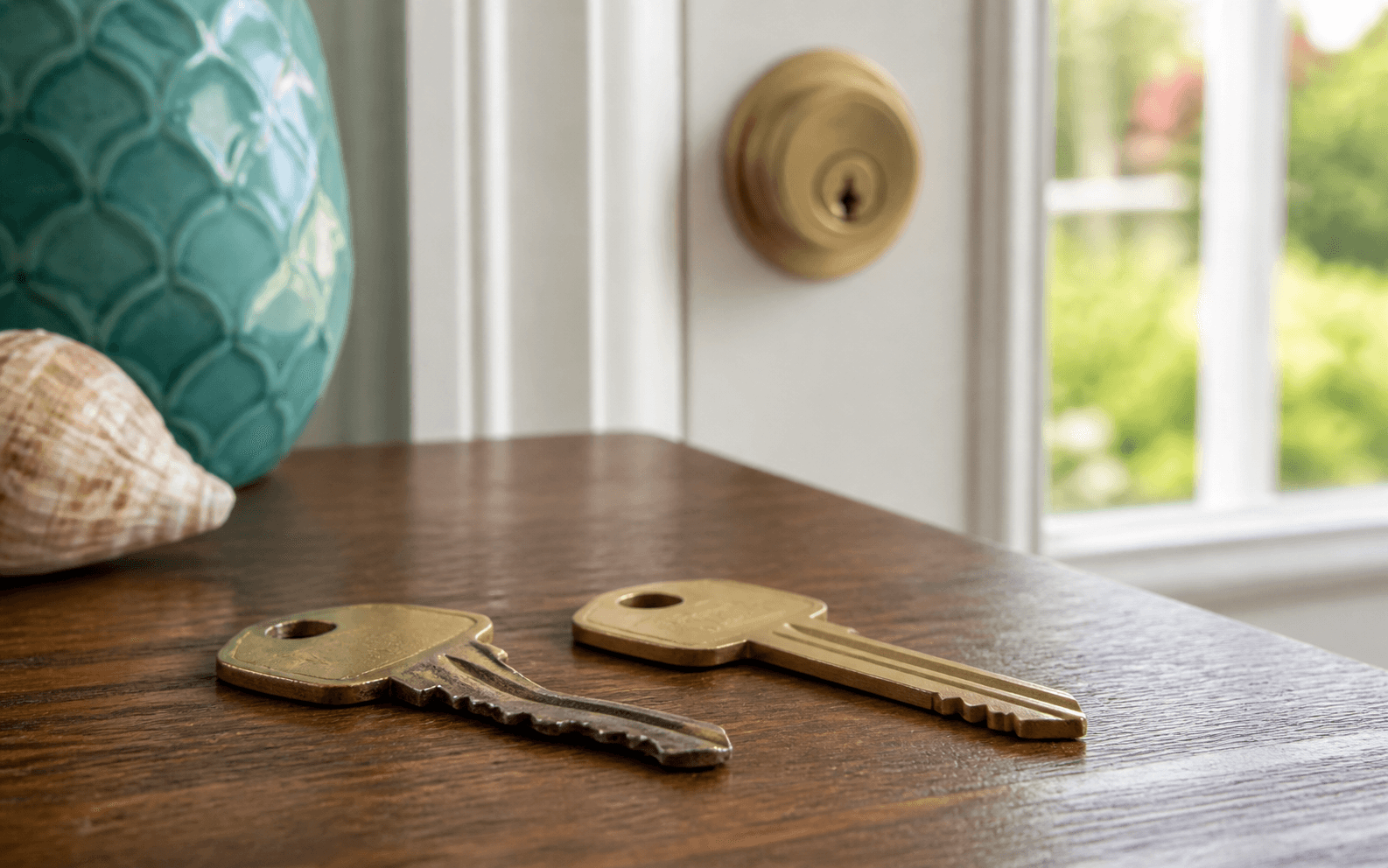
A key is usually hard to turn because the lock is dirty, worn, misaligned, corroded, or being used with a damaged key. Do not force it. A forced key can snap inside the cylinder and turn a small repair into an urgent lockout.
This is one of the most common warning signs customers notice before calling a locksmith. For homes and businesses in humid Southwest Florida, Greenlaw Lock & Key often sees sticky locks caused by a mix of salt air, moisture, worn keys, and doors that have shifted slightly over time.
What does a hard-turning key usually mean?
A lock should turn with steady, light pressure. If you have to jiggle the key, pull the door toward you, lift the handle, or push hard on the key, something is off.
The issue may be inside the lock cylinder, but it may also be in the door alignment. A deadbolt can feel like a key problem when the bolt is actually rubbing the strike plate. That is why the door should be tested open and closed.
If the key turns smoothly while the door is open but gets stuck when the door is closed, the lock may not be the main problem. The door, hinges, latch, or strike plate may need adjustment.
Could the key itself be the problem?
Yes. Keys wear down over time, especially if they are copied from copies. A worn key may still fit into the lock but fail to lift the internal pins cleanly.
Look for rounded cuts, bends, cracks, or shiny worn spots. If one key works better than another, the better key may be closer to the original cut.
Avoid making new duplicates from a worn key if you can. A locksmith may be able to cut a cleaner key by code or inspect the lock to decide whether the cylinder should be serviced.
Can dirt or debris make a lock stick?
Yes. Dust, pocket lint, sand, metal shavings, and old lubricant can build up inside the cylinder. Over time, that buildup can keep the pins from moving freely.
Exterior locks are more exposed. In Southwest Florida, wind-driven rain and humidity can make debris stick inside a lock faster than homeowners expect.
Use caution with lubricants. Heavy oils can attract more dirt and make the problem worse later. If a lock is valuable, old, or part of a business access system, it is better to have it cleaned and inspected instead of guessing.
How does door alignment affect the lock?
Door alignment is a major cause of hard-turning deadbolts. If the door sags, swells, or shifts, the bolt may no longer line up with the strike plate.
You may notice that the lock works only when you lift the door handle, pull the door tight, or push the door inward. Those are signs that the lock is fighting the door frame.
Alignment problems can come from loose hinges, settling, weather changes, worn weatherstripping, or a strike plate that was never installed cleanly. A locksmith can check whether the hardware needs adjustment or whether the door itself needs repair.
Can humidity and corrosion cause lock trouble?
Yes. Moisture can affect both the lock and the door. Metal parts can corrode, and wood or composite doors can shift with humidity.
Coastal air can be especially hard on exterior hardware. If you see rust staining, greenish corrosion, pitting, or a rough gritty feel when turning the key, the lock may be deteriorating.
Corroded hardware can sometimes be serviced, but replacement may be the better choice if the cylinder is badly worn or the lock no longer operates reliably.
When should you stop using the lock?
Stop forcing the key if it bends, sticks halfway, or requires heavy pressure. A broken key can lodge inside the cylinder, and extracting it may take more time than a basic service visit.
You should also stop relying on the lock if it sometimes fails to lock fully. A deadbolt that does not extend all the way into the strike plate is not giving the door its intended security.
If the lock controls a business, rental unit, office, or main home entry, do not wait until it fails completely. A lock that is hard to turn is giving you advance notice.
Is this a repair, rekey, or replacement issue?
It depends on the cause. Cleaning and adjustment may solve a dirty or misaligned lock. Rekeying may help when the cylinder pins are worn or when access control needs to change. Replacement is better when the hardware is damaged, corroded, loose, or unreliable.
Greenlaw Lock & Key can inspect the key, cylinder, latch, deadbolt, strike plate, and door fit before recommending the right fix. That matters because replacing a lock will not solve a door alignment issue by itself.
What can you check before calling?
Try the key with the door open. Then try locking the door while it is closed. If the problem only happens when closed, alignment is likely part of the issue.
Compare multiple keys if you have them. If one key works smoothly and another sticks, the sticky key may be worn or poorly copied.
Look at the strike plate and bolt marks. Scratches around the strike opening can show where the bolt is rubbing. Do not file or move hardware unless you know the lock will still seat securely.
What is the safest next step?
If the lock is getting harder to use, schedule service before it becomes a lockout. Most small lock problems are easier to address before a key breaks, a door stops locking, or a business entry fails during operating hours.
Greenlaw Lock & Key helps homeowners and businesses across Southwest Florida diagnose sticky locks, repair door hardware, and replace worn cylinders when needed. If your key is hard to turn, ask about high-security lock installation or emergency lockout service if the problem has already left you outside.
FAQ
Should I spray oil into a sticky lock?
Be careful. Heavy oils can attract dirt and make future sticking worse, especially in exterior locks.
Why does my deadbolt work when the door is open but not closed?
That usually points to alignment. The bolt may be rubbing the strike plate or missing the opening when the door is closed.
Can a worn key damage a lock?
It can contribute to rough operation. A worn or bent key can stress the cylinder and may eventually break inside the lock.
Is a hard-turning key an emergency?
Not always, but it can become one quickly. If the key is bending, sticking halfway, or needed for a main entry, schedule help before it fails.
Can the same lock be saved?
Often, yes. Cleaning, adjustment, key replacement, or rekeying may solve the issue if the hardware is still in good condition.